Thursday, December 11, 2014

From Preschool Teacher to Early Childhood Professor

In the fall of 1990, I started my freshman year at Missouri Southern State University as a secondary history major thinking it would be cool to teach history in high school.  During my first semester I had an introductory education course that placed us in our desired grade level for a short observation.  After my introductory time in that history class I quickly decided that high school was not the place for me.  Luckily, it was still my first semester and I had not taken classes that wouldn't work with another major.  Knowing that I still wanted to be a teacher but with smaller kiddos I switched my major to elementary/early childhood education.  I enjoyed the courses and the field experiences through which discovered where I belonged.  I even joined a student organization geared toward elementary and early childhood.  I graduated in May 1995 after a 10 week student teaching experience split between kindergarten and first grade.  

I got married less than a month after graduation and had secured a summer job with the local parks department as a playground director.  For this summer gig I spend my days supervising activities for kindergarten to sixth grade kiddos at a local park...it was hot and tiring but I was really tan that summer...and if it rained...I didn't have to work.  Before summer began, I had interviewed for a few positions in early elementary grade classrooms and a private preschool program...those situations didn't work out because I lacked experience (how does one get experience if they can't get hired because they lack experience?) and most of the programs didn't fit my personality or beliefs.  One day in August, I was alerted to a small newspaper ad for a teacher position in 3-5 year old classroom in the lab school at the college from which I had just graduated.  I applied for the job and was soon called for an interview.  The day of the interview I was working at my park job and it started raining in the afternoon which meant the park kids were picked up early and I was able to run home to shower and change for my interview.  I remember that my hair was not yet completely dry when I arrived for the interview...but at least I was visibly clean.  The interview went well and maybe a week or so later the director called and offered my the job...which I excitedly accepted. 


I started my teaching career in August of 1995.  I loved having my own classroom and I enjoyed the other teachers.   settled into a good routine with planning and executing fun activities in my classroom.  I inherited a gerbil named Fred who passed away shortly after I started...which may be the topic of another post.  The next summer I attended the Project Construct Basic Institute for a week to learn more about the curriculum model used by the Child Development Center.  I decided it made since to enroll to get graduate credit for attending the institute.  Little did I know this would be the start of my masters program.  I continued to take a class or two a semester from Missouri State University, they brought their masters program to my campus.  Soon it was announced that our program director would be retiring and we formed a search committee.  To make a long story short I ended up applying for and becoming director...I never had any aspirations to become a director and quite frankly wasn't sure what I was getting myself into.  

Upon becoming director I had a lot of things to learn...enrollment, purchasing, licensing, accreditation, hiring/firing, billing, and so much more.  One little job that came along with being director was advising some of the early childhood majors...which I found that I really liked.  During the first few years of my directorship I was coordinating an early childhood conference and teaching continuing education courses for child care providers.  Within the first few years as director I had a baby and I finished my masters.  I was soon asked to teach one of the early childhood courses...scary but fun!  After a few years of teaching adults I decided this was a new direction for me to pursue...which meant I needed to begin a doctoral program.  

In 2003, while pregnant with my second child I was accepted into the Ph.D. program at the University of Arkansas  in curriculum and instruction.  I started my doctoral work in the spring of 2004 while working full time as the center director, teaching one EC class, coordinating and teaching continuing education courses, coordinating an early childhood conference...with two kids, a husband, and a dog at home.  Now my plan was to wait for the lead early childhood faculty member to retire (or die) so I could have her position.  

Well...nothing happened until sometime in late 2007 when I saw a newspaper ad for an early childhood faculty position (and lab school director) position at my school's closest rival Pittsburg State University (only 30 miles from my home).  I thought, "What the heck..."  I was ABD and held the qualifications required...so I quietly applied for the position.  I was called for a phone interview and later an on campus interview in February 2008.  A few weeks later they called and offered me the job...I did the obligatory "let me think about it" and then accepted the position.  I made the announcement in March that I would be leaving my current job in July...lots of drama...lots of lessons learned soon my office was packed up and eyes were dried.  I said my goodbyes and then I had about a month to prepare for this new chapter in my life.

After a family vacation to Florida I got settled into my new office and began preparing for my fall courses while interviewing my subjects for my dissertation. It was a busy semester...everything was new and much of it was a blur.  I attended my first NAEYC conference that November with my new colleague (the lead preschool teacher) and a group of students...this would become an annual event (I have now presented at the conference for three years in a row).  I felt like I had settled in well and felt very comfortable.  As expected, the spring semester went even smoother than the fall.  In April, I defended my dissertation and graduated in May 2009.

My time at PSU has been great...I love working with people who want to work with young children.  I also enjoy being one of the advisors for our early childhood student organization.  My major accomplishments the past few years have been serving on the KAEYC governing board (as a member at large and now secretary); getting an article published in a journal;  contributions to a few regional publications and one popular parenting magazine; numerous local and regional presentations; achieving NAEYC accreditation of the preschool in 2012; and earning tenure and being promoted to associate professor in 2013.  I always say I have the best of both worlds...I work with the college students but I can sneak in and enjoy the preschool kiddos as needed.  


Thursday, April 3, 2014

Preschool Themes

Many early childhood teachers use a thematic approach in their classrooms.  There are some keys to choosing a good, developmentally appropriate theme:  
  1. relevance--tied to real life experiences, builds on child's background knowledge, helps children understand the world around them
  2. possibility for hands on activities--firsthand experiences or simulations
  3. available resources and materials
  4. potential for in depth projects to emerge
My first experience in planning a theme was in my junior or senior year in an undergraduate EC curriculum course.  The class was taught my by favorite teacher and later mentor, Dr. Nancy Smith.  A major project for the course was to choose a theme to plan activities around that would be taught in small groups and later be added to a thematic learning center.  We also had to coordinate a dramatic play center to be implemented with our theme.  I love planning and was excited to get started.  I had already decided I would choose a insect theme.  There was a slight problem, I didn't choose a backup plan for a theme and the day we announced our theme to the class someone else (who announced before me) chose an insect theme...what would I do?  Well...when Dr. Smith called my name to record my chosen theme, I blurted out that my theme was "feelings".  Not sure what possessed me to pick that particular theme...but it wasn't a good choice for many reasons...but I made it through that course and never used that theme on its own again (later I used some activities in an "All about me" theme).  

In my almost 19 years working with 2-5 year old kids I have implemented quite a few themes that did work well.  Some day I may devote future posts to outlining activities with certain themes...but for now I will just list my favorite themes.
  • All about me
  • Apples
  • Fall
  • Pumpkins
  • Thanksgiving
  • Winter
  • Spring
  • Five senses
  • Friends
  • Family
  • Pets
  • Zoo
  • Valentine's day
  • Weather--wind, clouds, rain, rainbows
  • Farm
  • Ducks
  • Dinosaurs
  • Berries
  • Pasta
  • Pizza
  • Insects
  • Bubbles
  • Colors
  • Nursery rhymes
  • Fairy tales
  • Breakfast
  • Transportation
  • Garden
  • Camping
  • Clifford 
  • Bakery
  • Birthday
  • Pond life--fish, frogs, reptiles
  • Babies
  • Grocery store
  • Olympics
  • Restaurant
  • 4th of July
  • Community helpers--post office, doctors/nurses, dentists, firefighters, policemen
Here are some pictures from my days of preschool past that highlight some of my favorite themes.  

Visiting sheep during a farm theme.  
Caging animals with our zoo theme.
Harvesting vegetables in dirt table with our garden theme
Washing babies.


To ask or not to ask...that is the question.

I have been grading lesson plans designed by my early childhood curriculum class and I keep running into the same issue on many plans...either in the closure or transition section of their plans they are asking two simple questions that serve no purpose.  Can you guess those two questions?  Hmmmm....think about it....here are the useless questions:

1.  Did you like the lesson?
2.  What was your favorite ________?

Here is why I do not think these are appropriate questions for preschool lessons.  First, these are closed ended questions that do not provide much information.  Ask a yes/no question and it gives the child the option of telling you that in fact, "no" he did not like your lesson.  Secondly, these questions do not attempt to gauge a child's understanding of concepts from the lesson.  Asking questions that cause a child to reflect on the activity would give you more information to determine the children's understanding of the lesson's target purpose.  If I ask a child about his or her favorite part of a lesson, I may find out that the sticking point was not my intended goal...which may be a good thing to find out...or I may find out that little Timmy's favorite color is blue and why do I need to know that? 

Here are some tips for asking questions that will yield more information:  

  • limit the amount of questions it isn't a game of 20 questions
  • provide time for the kiddos to answer
  • don't ask a question if you really do not need or want the answer
  • Types of questions
    • observation
    • reconstruction of previous experiences
    • relating cause and effect
    • prediction  
    • evaluation 
    • generalization
    • comparison 
    • discrimination
    • reasoning 
    • quantify
    • imaging something
    • proposing  alternatives
    • using  factual knowledge
    • decision making 
    • application 


Monday, March 31, 2014

Preschool Tummy Time

I mentioned in an earlier that I would explain what I meant by "preschool tummy time". 


Several years ago while attending a conference, my co-workers and I were turned on to an idea for using "tummy time" with preschoolers.  The idea was for preschoolers to engage in activities while lying on their tummies in an effort to strengthen their upper body (arms, neck, shoulders) as well as fine motor control which would help prepare them physically for future writing.  I never looked into the science behind it because it made sense and it sounded like a fun idea.  

Back at our center, each teacher prepared an area of her classroom specifically for tummy time.  The teachers gathered suitable tummy time materials in individual baskets and added them to a shelf near her large group rug...small individual throw rugs were added for children to use if they chose a different area of the classroom as their space.  A small portion of each day was devoted to the children playing in this way.  It turned out that it was a great chance to get the kids engaged with different materials and activities in a low key manner. Think about it...it is hard to get too rowdy when lying on one's tummy.  It made for a mellow time during the day.  They kids enjoyed these experiences and often requested "tummy time" which meant it kept us teachers on our toes finding appropriate materials to stock the baskets.mm

Here is a run down of some of the baskets to choose from:
  • Mr. Potato Head
  • Etch-a-Sketch (although hard to shake/erase while propped on one's elbows...a protective helmet might have been a good call with this basket)
  • Stationery, writing instruments, envelopes
  • Sorting baskets--kid's meal toys were perfect here
  • Small play sets--construction scene, doll house, dinosaurs, etc.
  • Coloring books, crayons, colored pencils
  • Puzzles
  • Games:  dominoes, tic-Tac-Toe, checkers, card games, memory
  • Lacing cards, dressing frames
  • Legos
  • Tray with play dough
  • Stencils for tracing
There are so many possibilities and possibly so many benefits!

Sunday, March 30, 2014

Some Thinking about Learning Centers

In the last week, I have been talking to two of my early childhood courses about using learning centers in EC classrooms.  I am a total believer in the power of learning through child initiated play activities...so I think one of the most important jobs of the early childhood professional is to plan the environment so that it works for the kids. To an outsider...the "play" centers in an EC classroom might not appear planned but they should and often do take much deliberation as to the choices of items to include.  One of my classes will be arranging a fictitious preschool classroom that must include a minimum of 5 learning centers.  My EC curriculum class is beginning to work on their thematic units that must include ideas for various learning centers.  
I get excited as my students are working on these activities...as I love to plan and I often begin plotting out new ideas I would like to put into motion.  

These assignments have caused me to reflect on centers I have implemented in my years as a preschool teacher.  In my classroom I always included the following centers:  blocks, dramatic play (corresponding with the theme), sensory tables (sand/water and anything goes), manipulatives, library corner, art, and often a thematic inspired area.  I have also tried some other centers for limited periods of time:  snack, computer, listening, music, science, and preschool tummy time (explanation to follow in a future post).  I was never brave enough to add a wood working center in my classroom.  

This past Friday, the lead preschool teacher, some of our student teachers, and I reworked the block area.  I wish I would have taken a "before" photo.  All the blocks were taken off the shelves, cleaned, and sorted.  Random blocks were gathered for use elsewhere.  Shelves were wiped down and new shelf labels were made.  A HUGE bin of extra blocks that had been in our playground storage shed was brought in...all blocks wiped down, and added to the newly organized shelves.  This cleaning and organizing adventure was the beginning of a block area enhancement project that I am working on for a future conference presentation.  I am planning on adding inexpensive simple items to lure the kiddos into the block area to play.  The block area has not had a makeover in quite a while and the kids need some new challenges.  The children's reaction to the items will be fun to observe and will provide the college students with some new skills to documents and ideas for their future classrooms.

The inventory on these shelves is a little more skimpy than others...more room for new items.

Nice load of unit blocks!

So nicely organized...until Monday.
Whole newly reorganized block area!

The first new addition to the block area are some tree blocks and forest animals as one of our student teachers is implanting a camping/forest theme next week


Tuesday, December 31, 2013

Happy Holidays Mrs. T!

As I was putting away my Christmas decorations this year I was reminded of some of my former kiddos because I was carefully packing away items that were gifts from my days as a preschool teacher.  I still keep in touch with some of the kids from days gone by...mainly through friendships on Facebook...I have former children who are planning to graduate from high school, who are in college, who just graduated from college, and a few who are now parents themselves...making me a "grand-preschool teacher".  Anyways...back to the gifts...I have had my favorites over the years...pre-Pinterest crayon monograms.  Here are some of the good...the bad...and the ugly (you determine the categories) from 18 years of working with little ones:

  1. Coffee mugs--I don't drink coffee but these mugs have served a decorations and pencil cups throughout the years.  I always write the child's name and date on the bottom of the mug.  One time a coworker of mine enjoyed mugs of hot cocoa with her entire class using real mugs that were gifts from families--the kids thought they were so cool with their heavy breakable fancy mugs.  
  2. Soaps & Lotions--After a day of smelling playground dust and dirty pants a hint of citrus, plumeria, and freesia never hurts.  Better yet...a gift card to Bath and Body Works!
  3. Candles--I received many candles that I took home because we couldn't use them at school...after a while one runs out of room to store candles and the competing scents can be overwhelming.  
  4. Ornaments--This insures that a former teacher thinks of you each year while decorating her tree...again...mark with name and year. 
  5. Framed photos of child or group of children!
  6. Restaurant Gift Cards--Always a nice choice for a teacher who is exhausted at the end of the day...preferably to a restaurant where one orders from a table and the bonus would be real table cloths.  
  7. Photo albums or scrapbooks to document the events and activities of the coming year.  To this day, I keep albums accessible in my office and flip through them on occasion when thinking of particular activities or children.  One time I had a former student visiting our college and she stopped by my office to say "hello".  I pulled an album off the shelf and we reminisced while flipping through the pages.  
  8. Personalized tote bags, pencils, note pads and classroom door decorations.
  9. Classroom items--children's books, bean bag chair, puzzle, or a new nap-time CD.
  10. Live scorpion.  Yes, this is a real item brought to me by a child...I bet you can guess which category it belongs in.  
  11. Many items that represented the school I worked for...paperweights, pens, mouse pads, sweatshirts, more mugs...
  12. Thematic wooden/plastic jewelry--While I do not dress much like Ms. Frizzle anymore, I used to totally rock the theme look from socks to earrings...every holiday and thematic unit had its own look.  I have a cool Santa necklace made from Legos!  
  13. Movie Night Gift Basket--I have received this item twice!  Both times consisted of large bowls for popcorn, microwave popcorn, movie candy, pop, and gift certificates for movie rentals.  
  14. Candy--This may seem like an easy fix for any teacher...and I do like candy...but I am kind of a candy snob...meaning not just any candy will do.  I prefer Candy House English Toffee to a Snickers...I prefer Brach's Candy Corn to Mallowcreme pumpkins...I prefer dark chocolate to milk chocolate...and I typically choose not to each off brand Dollar Store candy (ever hear of cocoa moths?) or anything homemade.  


    Things I never received as gifts...but would be awesome:  


    1. Tervis Cups with Lids--This is my go-to item for my kid's teachers because you can use with hot or cold drinks and there are many designs to fit the style of the teacher.  
    2. iTunes Cards--Today, if I were in a preschool classroom, I would love to be able to add some new apps to my iPad to use with the kids...or to be able to expand our music repertoire.  
    3. Subscription to an appropriate magazine to use either for the classroom--Ranger Rick, Highlights, or for the teacher like Mailbox.  
    4. Drink Gift Cards--Again, not a coffee drinker but if I were...I would love Starbucks.  But, gift cards to Sonic or other places where a teacher can grab an icy beverage before or after work is much appreciated.


    Thursday, September 12, 2013

    Confessions of a Cereal Box User

    The fall semester is back into full swing and I have caught my breath long enough to add a new post to my blog.  I have a list of ideas to tackle this semester and one thing that I love to think about is how to use junk or essentially "trash" in an early childhood classroom.  

    So...this post is dedicated to my top 10 ideas for using cereal boxes.  Cereal boxes are easy to acquire.  First off, if you are an early childhood professional cereal makes an easy breakfast, lunch, and sometimes dinner so the boxes could be accumulating in your own stash of "things to take to my classroom." Second, kids love cereal...parents are usually pretty willing to save boxes for you to use or you may be using cereal in your program for activities and snacks.  If you are sending out requests for boxes be sure to add an end date or a certain number of boxes needed so you don't end up having to rent a storage unit to keep your boxes...don't keep unattended boxes piled to the ceiling in your facility...the fire marshal will not understand the need for 50 empty Froot Loops boxes.  
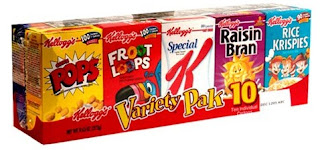
    • The individual size cereal boxes can be made into a memory match game...I did this for a breakfast unit.  You can find variety packs of 10...the front of the box matches the back of the box...cover the unfinished side of the box, laminate, and match away.

    • I have also created puzzles with full size cereal box fronts.  The kids liked the cereal box puzzles because it was something familiar to them. You could make it more difficult and use a side other than the "front" of the box.  


    • There was a time when I cut the top off of cereal boxes, covered them with contact paper and stored my children's writing/drawing journals in them standing up on the counter or writing table.  It was a great way to keep them together yet easy to flip through to find each child's journal.  You can also add labels to organize the sets by group.  
    • Cereal boxes, of the same size, with top flaps removed can be taped together, covered with contact paper and placed on a shelf to store construction paper by color.  It sure beats purchasing one from an   educational supply company and you have control over the number of paper slots.  
    • Cereal box fronts can be hole punched and hooked together to make environmental print books.  Or you can place the fronts in freezer zipper bags and tape together for students who may like to mouth the book.  
    • Stuff empty cereal boxes with newspaper...securely shut with packing tape and add to a grocery store inspired dramatic play center.
    • Empty cereal boxes of varying sizes can be used a percussion instruments.  This is a great opportunity to hear and classify the different sounds make by different sizes of boxes.  Drum sticks are not necessary but could be cool...use hands, un-sharpened pencils, rhythm sticks, etc. Another instrument idea is to cut a hole on one side of the cereal box and stretch rubber bands around box and hole...instant guitar!
    • Empty cereal boxes can be used for construction play.  They are easily stuffed, reinforced and covered to be used as large blocks in the block area.  A roll of cheap masking tape and a pile of empty boxes is a masterpiece waiting to happen.
    • A cereal box cut in half from top to bottom can be used for many craft projects--marble painting "pan", collage base, spatter paint receptacle, paint palette, the possibilities are endless.Cereal boxes can be used for children to stuff--they can add a certain number of items to boxes that have numerals printed on them.  They can add cut out letters that match letters on the box--during "R" week add R's to the Rice Krispie box.  They can add items that match a particular color indicated on the box.